
![Walker Evans [Subway Passengers, New York], 1938 Impresión vintage en gelatina de plata Colección privada, San Francisco © Walker Evans Archive, The Metropolitan Museum of Art](https://kbr.fundacionmapfre.org/wp-content/uploads/2025/10/walker-evans-768x508-1.jpg "Walker Evans")
Subway Passengers, New York, 1938
Vintage gelatin silver print
Private Collection, San Francisco
© Walker Evans Archive, The Metropolitan Museum of Art
Walker Evans. Now and Then
From February 26 to May 24, 2026
Discover the exhibition
In 2009, Fundación MAPFRE inaugurated its photography program with a retrospective devoted to Walker Evans (St. Louis, Missouri, 1903–New Haven, Connecticut, 1975). Today, sixteen years later, the institution offers a new reading of the work of this major artist and shows how his oeuvre continues to resonate with remarkable relevance. One of the qualities that lends significance to Walker Evans’s work—and that has undoubtedly contributed to making him one of the most influential figures on the international scene—is his reflective attitude toward the photographic medium. This stance distanced him from a theatrical or contrived approach in favor of one that was sincere, analytical, and deeply lyrical, a dimension directly linked to the artist’s concern for the context in which his images were conceived.
Walker Evans began working with photography in the 1920s, and over the course of his extensive career, which spanned more than fifty years, he produced some of the most iconic images in the history of the medium. He explored a wide range of subjects, from furtively taken street photographs to meticulous and precise studies of architecture, although for many years his best-known works were those he made in the American South beginning in 1930. Evans also embraced new artistic and technical developments, and toward the end of his life he explored the possibilities offered by the Polaroid camera. What unified his entire production was a profound interest in—and affection for—the appearance and essence of everyday life in a society increasingly obsessed with the new and the immediate.
Curator: David Campany
City Signs
Walker Evans stood out for deliberately and systematically incorporating all kinds of urban signage—ranging from sophisticated commercial signs to handmade notices, billboards, and shop windows—into his photographs. This set him apart from other photographers of his generation, who often excluded such elements in pursuit of a supposed aesthetic purity. Evans believed that these signs reflected society and its values, and in this sense his work connects with artistic movements such as Pop Art and Postmodernism. His images of signage not only explore the relationship between word and image, but also question the role of photography as art, document, and commercial tool, underscoring the need for dialogue between photography and popular culture.
Anonymous People, Anonymous Places
Walker Evans showed no interest in photographing celebrities; on the contrary, he was always drawn to the anonymous individuals he encountered on the street or in the subway. He created portraits with a lightweight camera, privileging the spontaneity of isolated figures, crowds, beach scenes, or workers in the midst of their tasks. In this sense, the simplicity of what he believed photography should be was also reflected in the subjects he chose: direct and straightforward photographs, with carefully considered compositions, yet profoundly lyrical.
Tradition and the Urban
One of Evans’s firm beliefs was that the authentic character of a society revealed itself more clearly in small towns than in large cities, which tended to blur individual particularities and traits. This idea—celebrating what is popular and native over the standardization brought about by big-city industries and metropolitan life—lies at the heart of American culture. Some of Evans’s finest and most celebrated photographs stem from this conviction, resulting in images of small town train stations and railroads, wooden buildings, grocery stores and old style gas stations, as well as typical objects such as antique pliers, rocking chairs, or bright red fire hydrants.
Walker Evans
Where?
Avenida Litoral, 30 – 08005 Barcelona
Time
Tuesday to Sunday (and holidays): from 11:00 a.m. to 7:00 p.m.
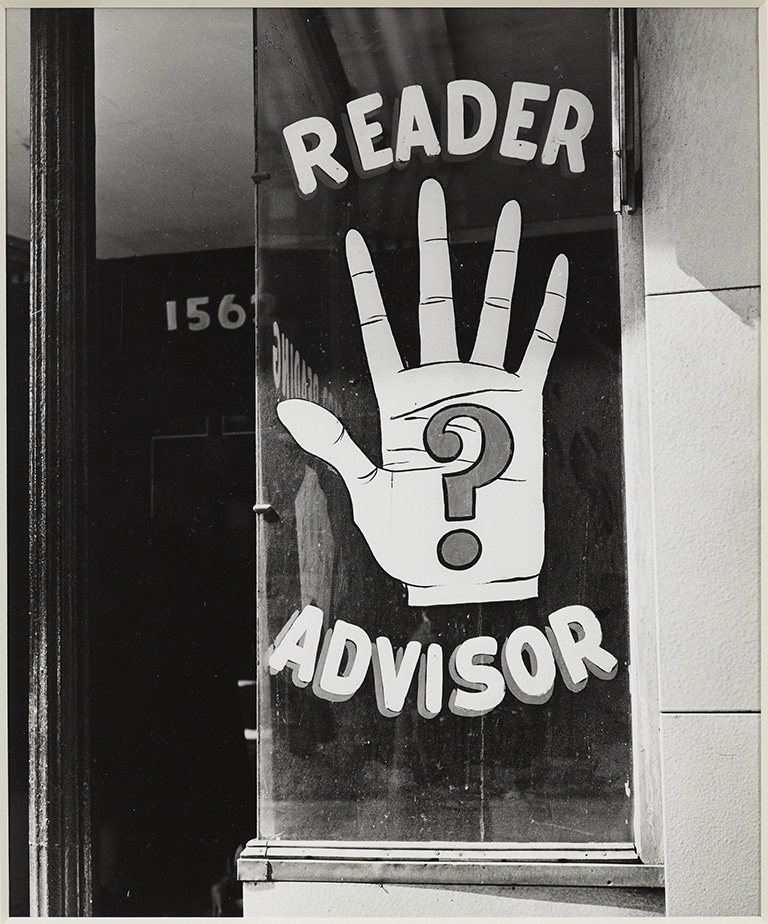
Gypsy Shopfront, 1562 Third Avenue, 1962
Vintage gelatin silver print
Private Collection, San Francisco
© Walker Evans Archive, The Metropolitan Museum of Art
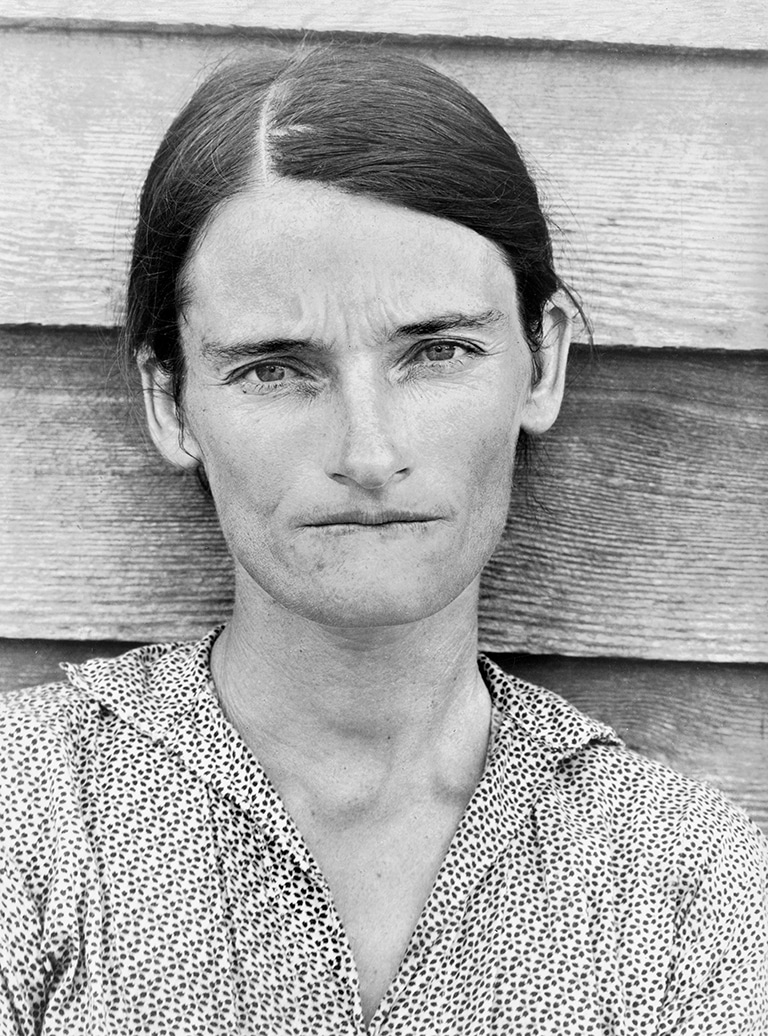
Alabama Tenant Farmer wife
(Allie Mae Burroughs, Hale County, Alabama), 1936
Vintage gelatin silver print
Private Collection, San Francisco
© Walker Evans Archive, The Metropolitan Museum of Art
![Walker Evans [Shadow Self-portrait, Juan-les-Pins, France], 1927 Vintage gelatin silver print Private Collection, San Francisco](https://kbr.fundacionmapfre.org/wp-content/uploads/2026/01/evans-galeria-03-768.jpg)
Shadow Self-portrait, Juan-les-Pins, France, 1927
Vintage gelatin silver print
Private Collection, San Francisco
© Walker Evans Archive, The Metropolitan Museum of Art
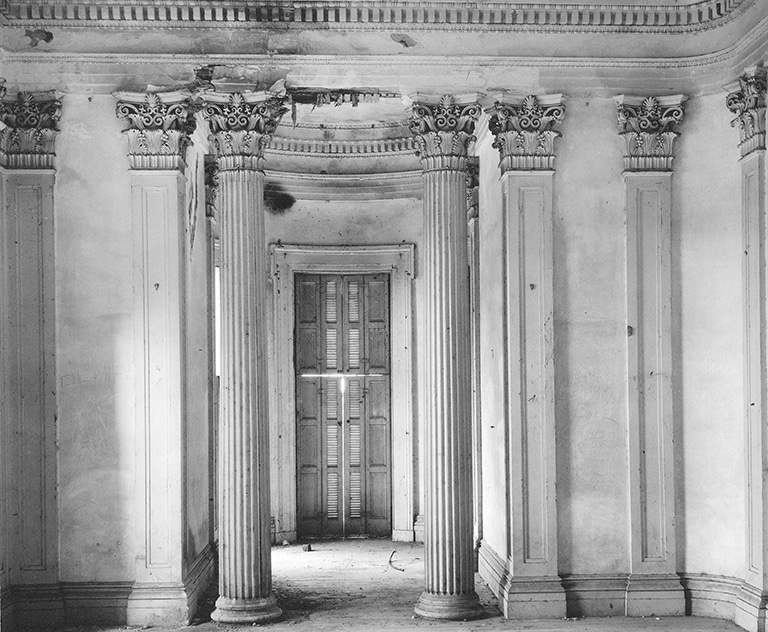
Breakfast Room, Belle Groove Plantation, White Chapel, Louisiana, 1935
Fundación Mapfre Collections
© Walker Evans Archive, The Metropolitan Museum of Art
Walker Evans.